
NYS Police Trooper Exam
Key Takeaways
- Learn about the New York State Trooper entrance examination and hiring process.
- Understand reasoning, memory, writing, and observation skills measured on the examination.
- Review cognitive and behavioral assessments required for New York State Trooper applicants.
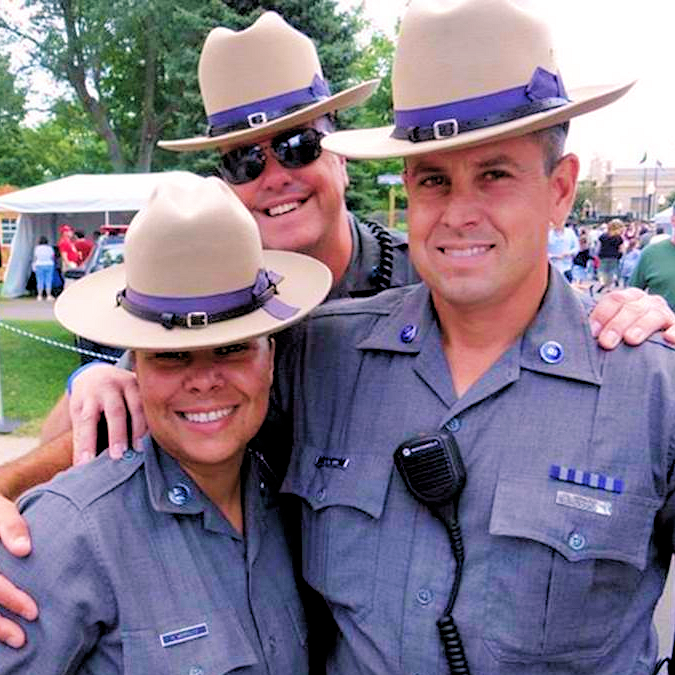
New York State Police Trooper Exam – What to Expect?

NYS Trooper SUV
The New York State Police (NYSP) Trooper Exam is considered one of the most challenging police written exams in the U.S. It was developed by IOS Test Publishers specifically for the NYSP and is administered by Pearson VUE. This computer-based exam is given at more than 50 Pearson VUE testing centers across New York State.
Unlike the NYS Civil Service Police Exam used by most local departments, or the the NYPD Exam and the Port Authority Police Officer Exam, the New York State Police Trooper Entrance Exam measures a broader range of cognitive and reasoning skills. Understanding the exam format and practicing with realistic NYSP test prep materials can dramatically improve your results.
Cognitive Questions - New York State Police Trooper Exam?
Study for the NYS Police Exam
The New York State Police Trooper exam has 150 questions that you will have 1 hour and 40 minutes to complete. The exam includes the following cognitive test topics.
Reading Comprehension
Vocabulary
Writing (Incident Report Writing)
Deductive Reasoning
Information Ordering
Inductive Reasoning
Pattern Recognition (Figural Reasoning)
Grammar (Clarity, Punctuation, Spelling)
Visualization - Facial Recognition
Spatial Orientation - Maps and Floorplans
Flexibility of Closure - Identify details in noisy background)
Observation and Recall of Visual Information (Photos)
What is the NYSP Personality Assessment?

Following the cognitive topics, you will take a Personality Assessment. You will have 20-minutes to answer approximately 60 questions about how you feel about certain things. These go fast, as your answers should be instinctive.
Your answer choices will be: Strongly Disagree, Disagree, Neutral, Agree or Strongly Agree. Example questions are:
When I am uncertain of how to do a task, I will usually ask for clarity.
I am more assertive than most of my friends.
When I get home from work or school, I usually feel stressed.